



October 31, 2025
WEEKLY TOUCHPOINT
“The Power of Compounding”
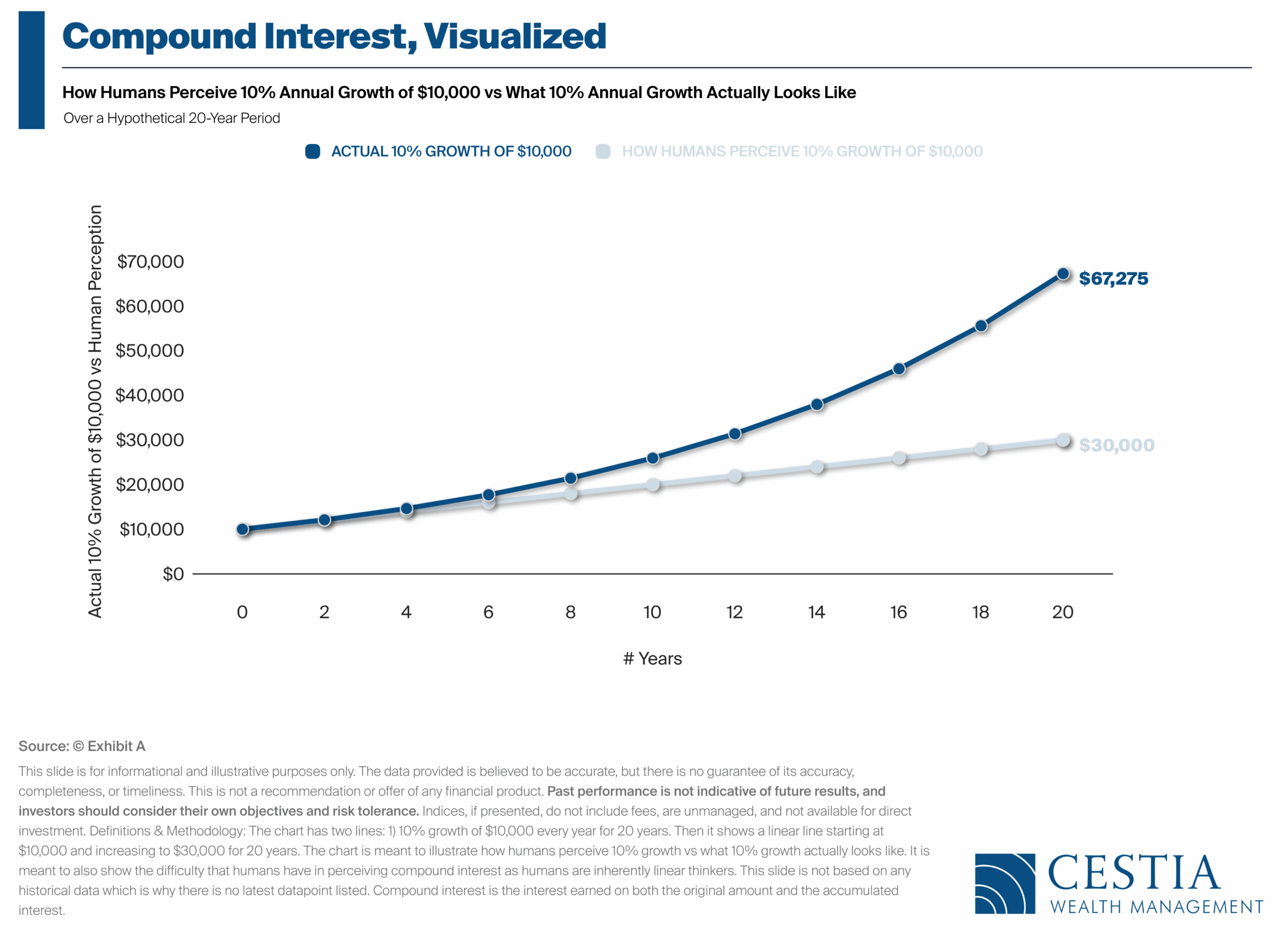
We humans aren’t naturally wired to think exponentially. We tend to see the world in straight lines—steady progress, predictable growth, simple math. But wealth doesn’t grow that way. Here’s why!
- Compound Interest, Visualized: Our minds often underestimate just how powerful compounding truly is. What seems slow at first suddenly accelerates, turning time into the most valuable asset of all.
- Perception vs. Reality of 10% Annual Growth: A 10% return on a $10,000 investment may look modest year by year, but over 20 years, the curve bends sharply upward. What once appeared linear becomes exponential—and that’s where compounding magic reveals itself.
- The Power of Patience and Consistency: Markets will fluctuate and emotions will rise and fall, but compounding rewards those who stay the course. With time, discipline, and steady participation, investors can harness this quiet force that builds true financial comfort.

Why Is the USA Natural Gas Price Dropping?
Here’s where the economy is starting to show ‘K-shaped’ bifurcation

When Life Throws a Curveball
Even the best-laid financial plans can’t predict everything. Life has a way of surprising us—car repairs, medical bills, home damage, or a family emergency that requires quick action. These moments test not just a client’s finances, but their confidence in the plan itself.
- Unexpected Expense Issues: No matter how thorough a plan may be, surprises happen. The key isn’t avoidance—it’s adaptability.
- What to Consider When Funding an Unexpected Expense: From identifying the right funding sources to understanding the tax impact, small decisions in the moment can have long-term ripple effects.
- Staying on Track Through Uncertainty: By preparing for the unexpected, clients can face disruptions without derailing their broader goals. Clear communication and a calm plan of action make all the difference.
Source: Financial Advisor publication

Equities
- Stocks climbed for the third straight week, with the S&P 500, NASDAQ, and Dow all setting new highs on optimism around renewed U.S.–China trade talks.
- Earnings season drove sentiment, with 83% of S&P 500 companies beating expectations—helped by strong results from the “Magnificent Seven.”
- Market gains remained concentrated in large-cap tech and consumer discretionary stocks, while smaller companies lagged.
- Defensive sectors like utilities and consumer staples underperformed, and market breadth stayed narrow despite headline gains.
- International markets were mixed, though emerging markets extended gains amid improving trade prospects.
Bonds
- Yields rose even as the Fed trimmed rates by 25 basis points to 3.75%–4.00%, reflecting investor uncertainty about the rate path ahead.
- The 10-year Treasury yield climbed to 4.11%, narrowing the 2–10-year spread to 0.51%.
- Long-duration bonds underperformed, while high-yield credit led the way.
- Investment-grade yields moved higher to 4.82%, and high-yield bonds to 7.16%.
Macroeconomic Data
- The government shutdown delayed several October reports, but housing and confidence data were released.
- Home price growth continued to cool, with the S&P Case-Shiller Index up 1.5% year-over-year.
- Consumer confidence dipped to 94.6—its lowest since April—but spending sentiment remained steady.
- The Fed’s quarter-point cut was expected, though policymakers were split on how aggressively to move next.
- Chair Powell hinted the central bank may adopt a more cautious tone at the December meeting.

(as of Monday’s Market Opening)
| Total Return (1D) | Total Return (1W) | Total Return (MTD) | Total Return (QTD) | Total Return (YTD) | |
| S&P 500 | 0.10% | -0.41% | 0.10% | 2.37% | 16.41% |
| Dow Jones Industrial Average | -0.50% | -0.46% | -0.50% | 2.00% | 11.24% |
| NASDAQ | 0.41% | 0.78% | 0.41% | 5.13% | 23.36% |
| NASDAQ 100 | 0.54% | 0.69% | 0.54% | 5.34% | 23.73% |
| Russell 1000 | -0.07% | -0.65% | -0.07% | 2.18% | 16.84% |
| Russell 2000 | -0.99% | -2.60% | -0.99% | 0.76% | 11.20% |
| Russell 3000 | -0.15% | -0.74% | -0.15% | 2.00% | 16.53% |
| ACWI | 0.00% | -0.66% | 0.00% | 2.29% | 21.27% |

The One Big Beautiful Bill Act and Small Business Sales
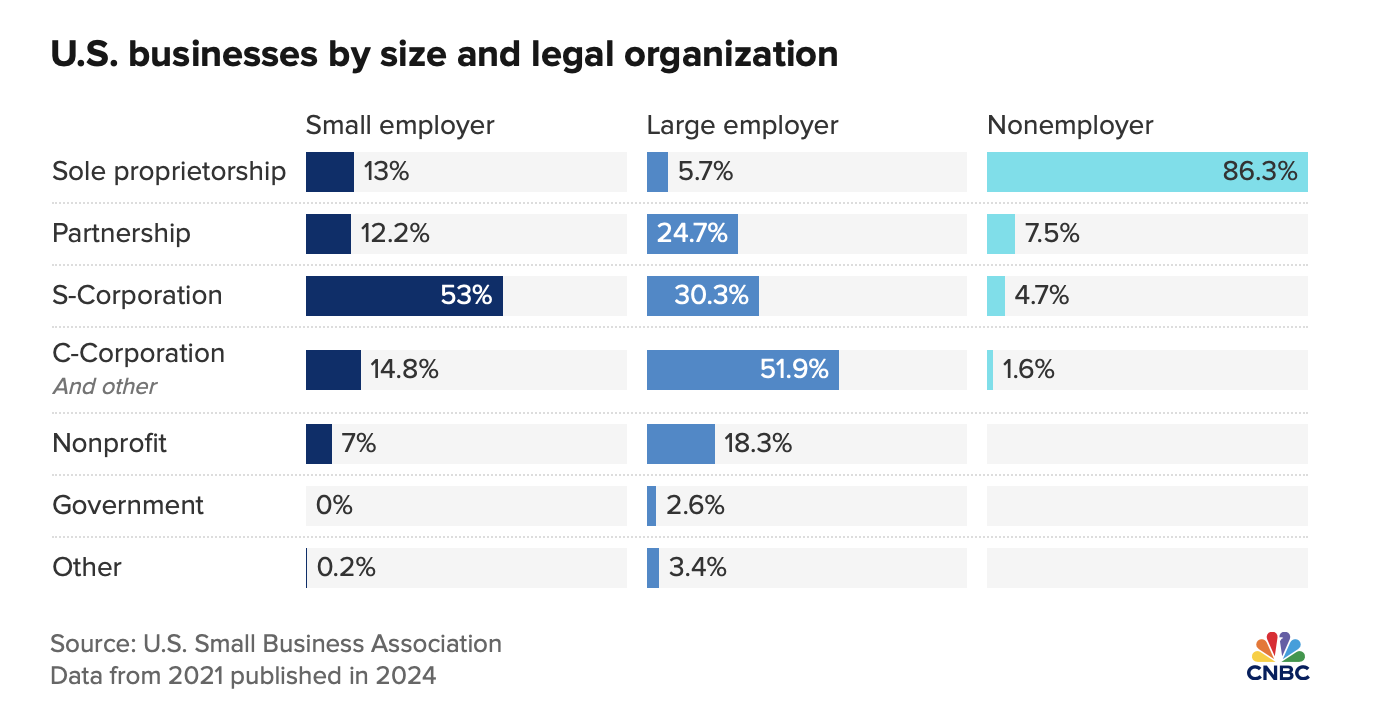
The One Big Beautiful Bill Act—signed into law by President Trump in July—significantly enhances the benefits available under the Qualified Small Business Stock (QSBS) provisions of the tax code, potentially putting millions more dollars in small business owners’ pockets when they sell. A recent article by CNBC highlights the following:
Key Highlights:
- Tax-Free Gain Increase: The tax-free gain cap on qualified C corporation stock rises from $10 million to $15 million for stock issued after July 4.
- Shorter Holding Period: The holding requirement is reduced from five years to three years, with partial exclusions for earlier sales (50% at three years, 75% at four years, 100% at five years).
- Expanded Eligibility: The asset cap to qualify increases from $50 million to $75 million, and inflation adjustments are now included—broadening access to QSBS benefits.
Why It Matters:
- More businesses—especially in manufacturing, tech, and professional services—can now convert to C corporation status to take advantage of QSBS treatment.
- Owners can exclude or defer federal capital gains taxes on qualifying stock, dramatically increasing after-tax proceeds from a sale.
- For entrepreneurs planning an exit within the next few years, these rule changes could make C corp conversion strategically and financially attractive.
Considerations and Cautions:
- C corporations face double taxation (corporate profits and shareholder dividends), though strategies exist to mitigate this with careful planning.
- QSBS qualification rules remain complex—owners must ensure proper corporate structure, stock issuance, and timing.
- The Exit Planning Institute reports that 58% of Baby Boomers plan to sell their business within five years, yet many lack formal valuation or estate plans—making proactive QSBS and exit planning even more urgent.
Bottom Line:
The One Big Beautiful Bill Act creates powerful incentives for small business owners to evaluate their corporate structure, timing, and exit readiness. For those planning to sell within the next few years, understanding and leveraging QSBS could be the difference between a good sale—and a great one.
SOURCE: The Exit Planning Institute and CNBC
Read the Full 2025 National Report from The Exit Planning Institute.
Global Client Survey
We’re inviting you to take part in a quick, anonymous client survey. Your feedback helps us fine-tune our process, elevate your experience, and ensure we’re delivering what matters most to you. This isn’t just about checking a box—it’s about shaping the future of how we serve you. Your voice helps guide our next steps. We’re listening. We’re learning. And we’re grateful for your trust.
Take Our Survey Now (click here)
Disclosures
- Wealth Mechanics™ is a registered trademark of Cestia Wealth Management. Unauthorized use of the trademark, including but not limited to commercial use, reproduction, or imitation without explicit written permission from Cestia Wealth Management, is strictly prohibited.
- Market commentary provided by NewEdge Advisors
- Charts concerning market data are provided by Exhibit A.
- Guides and other downloadable firm material respective to financial planning processes and data are provided and powered by fpPathfinder.
- Advisory services offered through NewEdge Advisors, LLC, a registered investment adviser. Securities offered through NewEdge Securities, LLC. Member FINRA/SIPC. NewEdge Advisors, LLC and NewEdge Securities, LLC are wholly owned subsidiaries of NewEdge Capital Group, LLC.
- Cestia Wealth Management is not a legal tax professional. We offer tax gap analysis for clients who desire to have a comprehensive financial plan, which requires in-depth tax strategy and planning as a distinct part of the overall customized solution. Please consult your tax professional on all matters addressed in this report.
- Information about annuities are not to be considered a recommendation. The information provided should not considered a recommendation to purchase or sell any particular security.
- Investing involves risk, including the potential loss of principal. No investment strategy can guarantee a profit or protect against loss in periods of declining values. Past performance is no guarantee of future results. Please note that individual situations can vary. Therefore, the information presented here should only be relied upon when coordinated with individual professional advice.